
Power vs. Force: On Developing Players
Either way you're right

“Whether you think you can or you think you can't, you're right”
-Henry Ford

Imagine running a player development company and also saying those words in that order.
If you still don’t know what the limited mindset of a Force Coach sounds like, that’s an exemplar…
An impressively limited mindset when your job is to do the very thing you think can’t be done.
“All of us have our own inner fears, beliefs, opinions. These inner assumptions rule and govern our lives. A suggestion has no power in and of itself. its power arises from the fact that you accept it mentally.”
-Joseph Murphy
It’s All Mind
The ability to develop hockey sense or not lies in your state of consciousness.
The Force Coach likes order and control. So their drills are neat, militaristic, on-air, and look clean. Because of this, they don’t develop players and hockey sense does not improve.
They believe it can’t be improved because they cannot manifest it based on what they do and think. That is their reality.
The other problem with Force is that they confuse these two different things for the same thing:
There’s a difference between ‘skill’ and ‘skills’ that most coaches aren’t aware of, which leads to players that can do every ‘move’ in the textbook but can’t be a hockey player.
Doing vs. Being is a theme on the ice too.
Doing Hockey Things
My coaching mentor dropped a truth bomb about 15 years ago and it dealt with mindset in the context it was first told to his team:
“There’s people that play hockey and there are hockey players.”
Super cliche today, earth-shatteringly true at the time.
The more I coach these 10u and TPH groups, the more I’m starting to hear this quote in the skill development context.
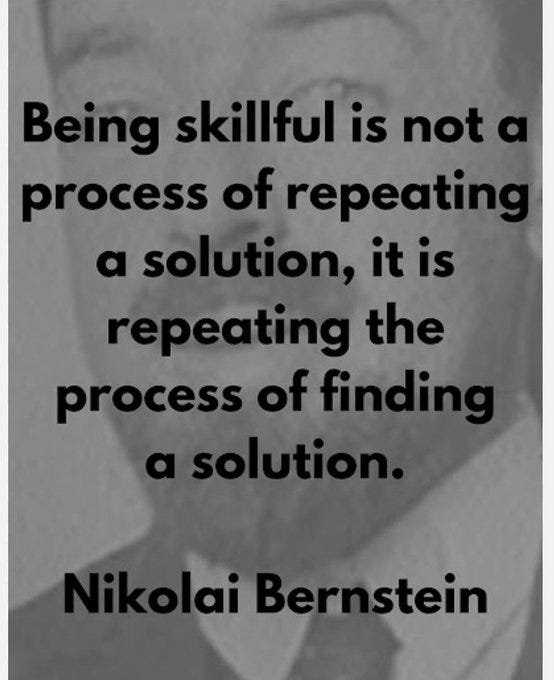
If you can ‘do’ hockey things on the ice (backhand toe-drag any obstacle, hurdle, truck tire or cone) and you consistently default to those moves when it’s time to pass out of pressure and play ‘heads up’ hockey instead of its inverse, you’re someone who plays hockey. Men’s league players default to dangling out of everything, real hockey players don’t. Or as a guy who knows skill said:
Being a Hockey Player
Being a hockey player means you have ‘skill’ not ‘skills’.
Skill is defined in the EcoD context of:
In ecological dynamics, skill is defined as the ability to adapt or attune to the environment through a continuous process of perception and action. This means that skill is not acquired internally, but rather emerges from the interaction between the performer, the task, and the environment.
-Source: NCBI
It’s easy to master the cone course, it’s harder to master a solution to a 2v4 inverted rush.
It’s easy to rep a toe-drag 5000 times this week. It’s harder to recognize when you should use a different solution based on the current position, skill and scenario you find yourself in with 5 minutes left in a game.
It’s easy to stickhandle through a mess of shit on the ice when that mess of shit can’t move. It’s harder to undo their thinking that it’s okay to go 1v5 against moving targets who want to take the puck from you:

Develop them for the game, not for the optics.
The best in the game have solutions, plural not solution.
Force creates people who can do hockey things.
Power creates hockey players.