
Ecological Dynamics Foundation Series: Part 4
What it is

2 seemingly disparate fields of study came together and had an awesome baby.
1/2 of the equation? Ecological psychology. Founder, J.J. Gibson:


Gibson contributes direct perception to this new baby. One of Gibson’s famous quotes is:
"We must perceive in order to move, but we must also move in order to perceive"
Some smart people (The EcoD people) thought to mix Gibson’s work with the person who observed and discovered dynamical systems theory. Founder: Henri Poincaré.
A student of this dynamical systems theory would study how systems evolve over time. Broken down into linear and non-linear subsections. We in sports would be more concerned with the non-linear… Basically, non-linear systems feature complex interactions and feedback loops.
Relevant subsections of the overarching dynamical systems theory that are also of interest. Non-linear dynamics and chaos theory. In the following two tweets, I attempt to give those theories to you in just a few words.

Here is a diagram from Mark that puts some more meat on complex systems and their counterparts:


The issue with complex systems is that coaches are culturally rooted in this thing called control. Most coaches love control:
Complex systems are like weather. The conditions may be favorable for rain, but water may not fall from the sky that day. You can’t control the weather. The best you can do as an ecological coach is create favorable conditions for a behavior to emerge. Then you have to let go.
Putting the Direct Perception Thingy and the Action Thingy Together
Okay, we have the proverbial egg and sperm of this new hybrid baby called ecological dynamics, so what happens when you actually put them together? I offered a thread to the internet from a number of people inside and outside of sport that share a holistic ‘learning’ or ecological perspective and the internet didn’t like it…
You get called a heretic by the mob of legacy coaches that don’t want to change:

The responses are fun:

Rick taught me that holistic training design is actually one-dimensional thinking:

I’m digressing slightly.
The point is most people aren’t ready for the new thing. Even though it’s not that new. The average speed of change is painfully slow:


Norman’s book discusses numerous examples of currently available technology to make elevators better and communicate with each other if there are more than 2 or 3 (like in the lobby of a large hotel).
He also talked about how HDTV technology was sitting around ready to go for the better part of 30 years before we put it into people’s living rooms. Because like, we’d have to change some things… Here’s what we knew in 2011 and 1998… Written from a Carl Woods paper:
In 2011, Araújo and Davids highlighted the relevance of organismic asymmetry to sport scientists seeking to understand how athletes self-organized during practice and performance. This theoretical re-positioning offered significant implications for how sports practitioners could learn to rely less on traditional approaches to athlete development and preparation for performance, which emphasized verbal instructions and corrections, constant repetitions to “optimize a movement pattern,” and the internalization of rehearsed behavioral reactions and responses in training. Indeed this theoretical re-positioning was in agreement with the empirical work conducted by Schöllhorn and colleagues who demonstrated both inter-individual (Schöllhorn and Bauer, 1998) and intraindividual (Schöllhorn et al., 2002) variability and differences with regards to movement patterning, highlighting the fallibility of sport pedagogies grounded in the (attempted) acquisition and reproduction of “optimal” movement patterns.
The good news is that the cost of an ecological coach isn’t massive. You just trade the person making your players go through cones and run 5v0 breakouts for someone who has a grasp of designing environments which help your players solve problems better over time by exposing them to variability, and a boatload of context representative of the game. And I don’t know… A mistake or 200 at practice:
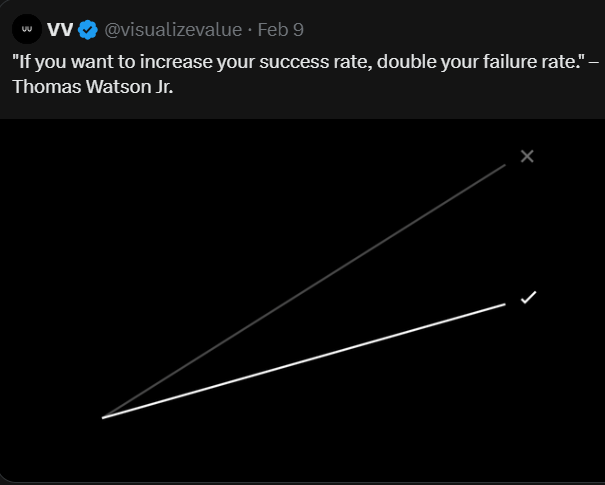
And yes, I’m perceiving the reader’s thoughts right now… Drew, please don’t get to the end of Part 4 without giving us an idea of what this thing is…
Okay, fine.
What is Ecological Dynamics?
Here’s Carl Woods from the same paper:
An ecological dynamics rationale, integrating ecological psychology, dynamical systems theory, the complexity sciences, and evolutionary science, views skilled behavior as the emergence of functionally adaptable performance solutions (i.e., actions, for a detailed review, see Araújo et al., 2020). In this framework, behavior is a self-organizing phenomenon that emerges from the continuously dynamic interplay of an organism’s characteristics and the affordances (possibilities for action: Gibson, 1979) offered in a specific competitive performance environmental context in which they emerge (Renshaw et al., 2009). Specifically, the ecological dynamics approach focuses less on the putative control mechanisms of organisms, like internalized representations and knowledge structures stored in memory, and more on the reciprocal nature of perception and action which supports performance functionality.
Great, Drew. What does that all mean in a less sciencey sounding explanation that I can understand?
Senses guide movement, and movement changes what is perceived in real time. The perception-action loop happens at the same time. Looking and moving all at once.
Self-organization is recognized over pre-planned movements. Movement solutions, not movements. The body naturally finds the solution to each 1 of 1 problem it faces. This creative pass ‘technique’ (technique in air quotes because its a made-up term, his ‘technique’ to solve this particular problem emerges in the moment based on current conditions and constraints) hasn’t been practiced once from this player in the video below, he perceives a teammate in space as he’s attempting to beat his check and, mid-fall, self-organizes into a creative solution to get the puck to that space.
 Drew Carlson@drewcarlsonhp"The ecological dynamics approach focuses less on the putative control mechanisms of organisms, like internalized representations and knowledge structures stored in memory, and more on the reciprocal nature of perception and action which supports performance functionality."11:55 AM · Jul 30, 2026 · 1 View
The CLA is used within this overarching theory. The CLA manipulates the individual, environment, or task to create space and variability for learning to take place.
Key Intentions in Your Environmental Design
Repetition without repetition- The goal might be to beat your defender in a 1v1 and earn a shot in the slot, but there are 1000s of ways to beat that defender when the rep goes live. Commander’s intent is deployed to allow you to accomplish the goal in a variety of different ways and however you see fit based on the affordances presented to you
From that same Woods article:
“The implications for practice and performance were captured in the phrase of “repetition without repetition,” indicating how practice designs for trainers and coaches should provide opportunities for athletes to solve performance problems in different ways using a variety of behaviors.”
Task Exploration- Functional solution to the problem over mechanical perfection. The perfect slapshot that is broken down frame by frame in the textbook might not be available to you with a defender in your face; you still need to score. EcoD trains you to be adaptable and finish in 1000’s of different ways from different joint angles, stick pressure, hand positions on the stick, etc
And listen, if this is your first exposure to this stuff, it’s going to maybe seem a bit overwhelming. So, I’ll try to ease your mind with this…
When in doubt, if it’s play-centered design, and there’s a chance of ‘failure’ or a ‘mistake’, you’re doing this thingy:

Reminder: opponents are the connection to the game.
Put bluntly… If there aren’t defenders in what you’re doing, class is officially NOT in session, and nobody is learning a thing. If there’s a chance of failure, you’re giving your players a chance at future success.
This next part is especially true for invasion sports… If it doesn’t evolve their perception, it doesn’t evolve the athlete.

Which is what we’re supposed to be doing… I think.
Carl Woods and colleagues think so too:
This is an exciting era for sports practitioners and applied scientists interested in understanding how to help athletes “grow and flourish” in complex performance surroundings. In a high-performance sport environment, the significant aims of coaches, sport scientists, and performance analysts are to develop “athletes of the future” and prepare “athletes of the present” for competitive performance.
