Before I scored a backdoor tap, before Erling Haaland, there was another great underloader who never got his flowers in our game. He scored in that AHL game video above, taking 2 of the least powerful strides the game has ever seen. Don’t worry about me, I’m no threat… And then the puck is in the back of the net.
I recently went and visited one of the coolest places on earth.
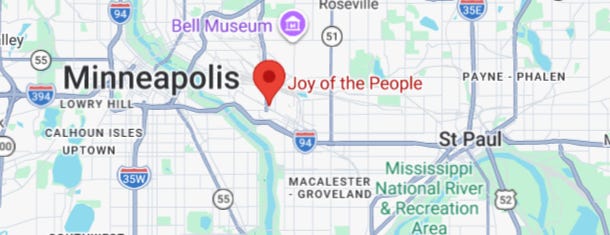
Located directly between the Twin Cities sits a soccer player’s paradise.
Outdoor fields, indoor futsal courts, and top-flight European games playing on the TV in the players' lounge. Lunch with your friends, zero cellphones in sight. And the best part was the word ‘elite’ didn’t appear on any of the walls or come out of anyone’s mouth the entire time.
It’s not a multimillion-dollar megaplex; it’s something that would fit into Rasmus Ankersen’s ‘The Gold Mine Effect’ book. The paradox the book was hitting at… The non-elite-looking places just happen to produce the most elite talent.
There’s Power in that.
And something Powerful is happening there. If you want all of the details on the process, read Ted’s ( Play to the People ) book, “The Talent Thief”.
Here are some of the conversation topics from my visit and thoughts I’ve had in the days since visiting.
Our talk about Josh Ho-Sang
Josh played too early to have people appreciate his ‘underload’ abilities. He played ‘easy as possible’
Energy first, then design. Go ahead… Invert this quick if you don’t believe me. The best-designed CLA SSG will not yield the skill adaptation you’re looking for if kids are afraid to make mistakes. Energy is the conduit. Failure is a requirement. If kids are ‘fearless’ like the play kids at Joy of the People are, they will try hours of 1v1 movement solutions that don’t ‘work’ today. But they’ll work in 3 months, 3 years, and 13 years. Because failure leads to adaptations for improved 1v1 fitness.
Ted and the ‘coaches’ at Joy… Who don’t explicitly teach, by the way… Are developing the most dangerous species of player… The ‘Target Player’:
The music is on, the coaches aren’t ‘coaching’, they’re playing with the kids. Zero parents are in the building. Fear doesn’t exist; there are no conditions for it to be created:
Losing makes people ‘go for it’. If kids aren’t perceiving and acting on back cuts and other off-puck movement that could get them into more dangerous space to score, instead of lecturing them, just pull on a lever and see what emerges. If you want a certain cohort of players to take offensive steps, make them start the game down a few goals.
The first principle of player development is simple. You have to be immersed in it to adapt to it. You won’t learn to survive or thrive on a deserted island by living on a yacht.
You will not increase your ability to desync from a check if you’re on offense and need some space by faking out the ‘air’. And you can’t ‘teach’ it explicitly.
Josh Ho-Sang was 1 of 1. He had his own style, skating stride; he was full of creativity… Now players look like they were made in a factory. If we want to understand how we get back to more Josh Ho-Sang’s emerging… We might consider play as the vehicle to drive us to that beautiful destination.
Play kids have the highest fitness.
‘Play kids’ have 17 beaks.
They have warm and cold blood.
Scales, wings, fins, lungs, blowholes, gills.
They can eat any diet. Digest anything that enters their system.
Can live at the bottom of the ocean and the top of a mountain.
Adapt or die.
Discussion about this video
The In-Powered Coach
Some leaders transform what is shared into value for themselves, their staff, and players.
Will you be one?
Some leaders transform what is shared into value for themselves, their staff, and players.
Will you be one?